AT&T CEO Skeptical of Starlink's Mobile Ambitions
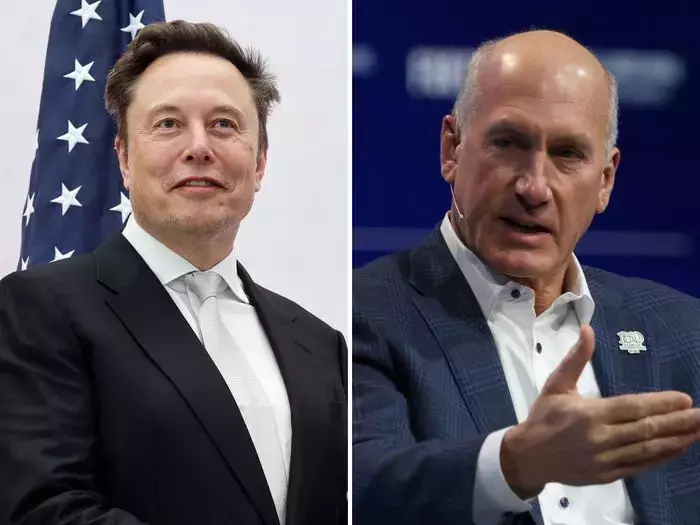
AT&T's chief executive officer, John Stankey, has voiced his doubts regarding SpaceX's aspirations for Starlink to become a leading mobile network provider in the United States. Stankey underscored AT&T's enduring advantage, stemming from extensive investments in urban and suburban cellular infrastructure, asserting that competitors would struggle to match their operational efficiency, network quality, and integrated service offerings. While recognizing the value of satellite-based internet for underserved rural regions, he remained largely unimpressed by Starlink's recent acquisition of low-band spectrum, questioning its ability to deliver superior indoor coverage and overall performance, especially in high-demand settings.
AT&T's CEO Questions Starlink's Mobile Network Viability
On October 21, 2026, during AT&T's third-quarter earnings call, CEO John Stankey addressed the burgeoning mobile ambitions of Elon Musk's Starlink. This discussion followed closely on the heels of an announcement by Musk and SpaceX COO Gwynne Shotwell, revealing that Starlink Mobile had already amassed over 22 million monthly users. Stankey, however, maintained a cautious stance, highlighting AT&T's long-standing strategic investments in dense urban and suburban areas, which he believes provide an insurmountable lead in network performance and customer value proposition.
Stankey acknowledged that satellite internet, particularly low-Earth orbit (LEO) constellations like Starlink, offers a viable solution for extending broadband access to remote rural locales where traditional fiber and 5G infrastructure deployment is cost-prohibitive. This perspective aligns with the industry's view of satellite technology as a complementary solution rather than a direct replacement for established terrestrial networks.
Despite Shotwell's announcement on Tuesday regarding FCC approval for 15,000 new V2 satellites and a recent agreement to acquire a portfolio of low-band transmission spectrum, Stankey remained unconvinced. He emphasized the critical importance of indoor network performance, especially in crowded venues such as stadiums and hospitals. He argued that these environments represent significant load challenges, even with robust Wi-Fi networks in place. Stankey's remarks suggested that a single carrier of low-band spectrum, a likely reference to Starlink's recent acquisition, would not be sufficient to compete effectively with the comprehensive and deeply integrated infrastructure that AT&T has cultivated over decades.
The ongoing dialogue between major telecommunication giants and emerging satellite internet providers underscores a pivotal shift in the connectivity landscape. While Starlink's rapid user growth signals a strong demand for its services, particularly in areas lacking traditional broadband, AT&T's CEO highlights the intricate challenges of scaling such services to rival the performance and reliability of established mobile networks. This rivalry will undoubtedly drive innovation and competition, ultimately benefiting consumers through improved connectivity options and advanced technological solutions.
A Shifting Paradigm in Global Connectivity
The burgeoning rivalry between established telecommunications giants like AT&T and innovative satellite internet providers such as Starlink highlights a fascinating shift in the global connectivity landscape. From a reporter's perspective, this isn't just a corporate squabble; it's a critical discourse on the future of how we access and utilize internet services. Stankey's skepticism, while rooted in AT&T's established strengths, also serves as a crucial reality check. Building a comprehensive, high-performance mobile network involves more than just launching satellites or acquiring spectrum; it demands extensive ground infrastructure, intricate operational proficiency, and the ability to deliver consistent service in diverse and challenging environments, particularly indoors.
The debate brings to light the fundamental differences in approach: AT&T's incremental evolution of terrestrial networks versus Starlink's disruptive, space-based solution. While satellite internet offers a compelling answer for underserved rural areas, the nuances of urban density and indoor coverage remain complex hurdles. This dynamic competition will likely spur further innovation from both sides, pushing the boundaries of what's possible in terms of speed, coverage, and reliability. As consumers, we stand to benefit from this technological arms race, as each player strives to offer more robust and accessible internet services, ultimately redefining the standards of global connectivity.