United Airlines CEO Advocates for National Wealth and Inheritance Taxes
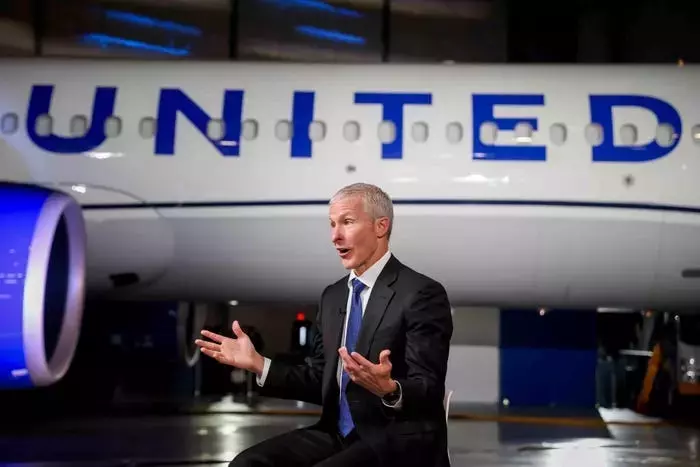
United Airlines CEO Scott Kirby has publicly advocated for implementing a national wealth tax and significantly increasing inheritance taxes, asserting that substantial wealth disparities represent a fundamental danger to societal stability. His declaration underscores a growing debate among corporate leaders regarding economic equity and the role of taxation in addressing it. Kirby's perspective, though potentially unconventional for a high-ranking executive, highlights a recognition of the broader social implications stemming from concentrated wealth.
Kirby's rationale for a national wealth tax stems from his belief that state-level initiatives would be ineffective due to the mobility of wealthy individuals. He elaborated on his position in a recent interview, emphasizing that such a tax needs to be uniformly applied across the country to prevent capital flight. This argument suggests a pragmatic approach to policy-making, acknowledging the complexities of taxation in a globalized economy. His personal willingness to contribute, stating, 'I would pay them,' when discussing inheritance taxes that approach 100% at certain thresholds, further illustrates his commitment to these principles.
The concept of wealth taxation is not merely theoretical; it is actively being tested, with California preparing for a vote on a pioneering 'billionaire tax.' This initiative has ignited a significant battle, with some of the state's most affluent residents mobilizing to oppose it. Notably, Google co-founder Sergey Brin has reportedly contributed a substantial sum, over 0 million, to efforts aimed at undermining the proposed tax through alternative measures. This high-stakes conflict in California reflects the broader national discourse surrounding wealth redistribution and the resistance it often encounters from those who would be most affected.
However, not all prominent figures share Brin's apprehension. Jensen Huang, the CEO of Nvidia, has expressed a contrasting view, indicating his readiness to pay billions if California's wealth tax is enacted. Huang, whose personal fortune is estimated at 0 billion, remarked that the ability to pay significant taxes is a privilege, underscoring a different philosophical approach to wealth and civic responsibility. His statement, 'I'm not afraid of paying taxes. I'm just afraid of being poor,' injects a unique blend of humility and perspective into the discussion, suggesting that for some, extreme wealth comes with a corresponding duty to contribute to the public good.
The ongoing discourse surrounding wealth and inheritance taxes, amplified by the views of influential CEOs like Scott Kirby and Jensen Huang, reflects a critical societal conversation about economic fairness. These discussions extend beyond mere financial policy, touching upon the very fabric of social responsibility and the sustainability of current economic models in addressing widening wealth gaps.